

Shop

[wpcf_form]

Showing 1–16 of 23 results

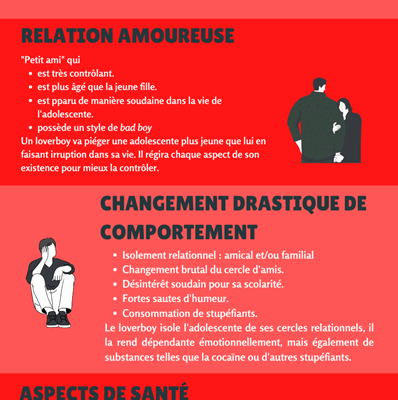
Youth prevention in the Federation Wallonia-Brussels

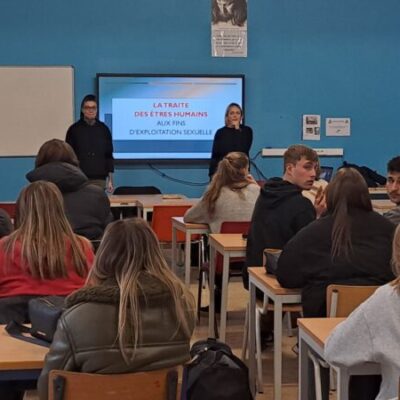
The Samilia Foundation is currently carrying out an awareness-raising project on sexual exploitation among young people in schools, supported by the Equal Opportunities Directorate of the Ministry of the Fédération Wallonie-Bruxelles. This project aims primarily to inform and raise awareness, but also to prevent a relatively young audience from becoming involved in human trafficking, sexual exploitation, and the loverboy phenomenon. Young people represent a particularly vulnerable target group on these issues. In practical terms, our interventions take place over two consecutive class hours, which can be organized by the class teacher or any teacher interested in addressing this topic.

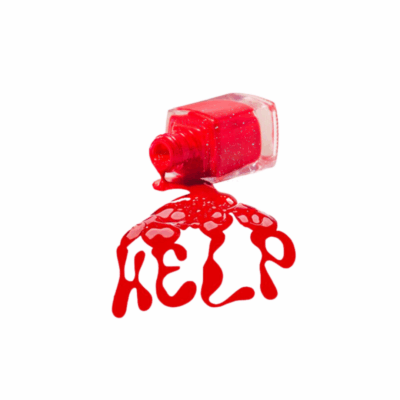
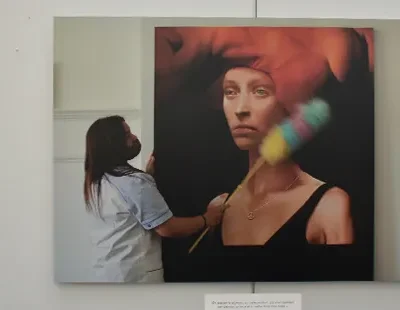
Beneath the Nail Polish: Human Exploitation

Awareness Campaign on Economic Exploitation in Nail Bars / 2023

Human trafficking tends to develop in economic sectors that rely on low-skilled labour. By reducing the demand for goods or services produced by trafficked workers, it is possible to fight concretely against this exploitation of human beings.

You can help drive change by avoiding nail bars where workers are exploited. Here are some indicators that may help you identify them:

– A particularly strong smell of products: often harmful and combined with poor or insufficient ventilation, making it unbearable for workers to breathe throughout the day. The products used do not always comply with EU standards → the label should appear on the packaging. – Poor hygiene practices: tools are not sterilised → risk of infections for clients. – Excessive speed of work: because workers must perform as many services as possible → stress increases the risk of injury for clients. – (Almost) unlimited availability: workers are there 7 days a week, outside official hours, with appointments made via SMS/WhatsApp. For example, during COVID, workers solicited clients in the street on weekends or evenings, even when salons were officially closed. – Employees’ clothing reflects poverty. – The worker does not speak French or English: communication is difficult or impossible without another worker translating. – Very low prices: intended to attract a maximum number of clients, served in rapid succession. Workers are forced to work continuously, often without breaks to eat.- Workers soliciting customers outside: employees from different nail bars compete openly to pull in potential clients. – Presence of both men and women: unusual in the beauty sector, which is typically dominated by women.

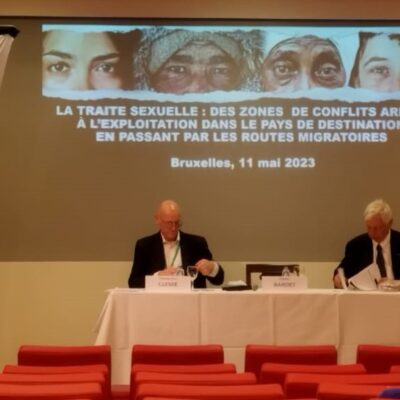
Conference: Sexual Trafficking – From Armed Conflict Zones to Exploitation in the Destination Country via Migration Routes

SEXUAL TRAFFICKING: FROM ARMED CONFLICT ZONES TO EXPLOITATION IN THE DESTINATION COUNTRY VIA MIGRATION ROUTES

11 May 2023 – Brussels

The Samilia Foundation (Belgium) and Stand Speak Rise Up! (Luxembourg) organized a conference on 11 May 2023 in Brussels on the theme: “Sexual trafficking: from armed conflict zones to exploitation in the destination country via migration routes.” Two topics were addressed during this afternoon of study:

  • Sexual violence against women during armed conflicts

  • Sexual trafficking

These topics are not so distant from each other, given that, on the one hand, this type of crime is gendered and, on the other hand, sexual violence committed in the context of armed conflicts may be only the starting point of a situation of human trafficking.

The first part of the conference addressed sexual violence against women in armed conflict contexts. These acts are not necessarily human trafficking but constitute war crimes under both international and national standards. The example of Eastern Sahara shed light on this crime and demonstrated that such violence can be considered a push factor leading women to migrate to countries where they believe they will be safe.

Children born of these wartime rapes were given particular focus through a legal and sociological approach. This analysis can also be applied to the situation of children born from sexual trafficking, since the psychological trauma experienced by the victim is similar and may lead to rejection of the unborn child.

Wars are also push factors that force people into migration. They drive those fleeing them onto human trafficking routes, which are also places where sexual violence occurs. The approach proposed for this part was both legal/factual and journalistic, with a synthetic presentation of reports carried out in situ by a senior reporter specializing in human trafficking.

Trafficking routes often lead women to sexual exploitation in the destination country. The last two presentations therefore focused on human trafficking— the third most profitable crime in the world—specifically for the purpose of sexual exploitation.

The first presentation developed the notion of sexual trafficking within the meaning of international and regional conventions. The second analyzed the obligations of States to prosecute and try perpetrators, arising both from anti-trafficking legal instruments and from those of international criminal law, including international humanitarian law.

Do you believe you may be a victim of trafficking?

Awareness campaign on economic and domestic exploitation / 2022

  • Not paid (or barely paid) for the work performed.

  • Is insulted or threatened – subjected to physical, psychological, and/or sexual violence.

  • Works 7 days a week or nearly – and is sometimes locked in or held captive.

  • Isolated, with little or no social contact.

  • Identity documents and/or phones confiscated.

  • Under the control or influence of the person for whom he/she works.

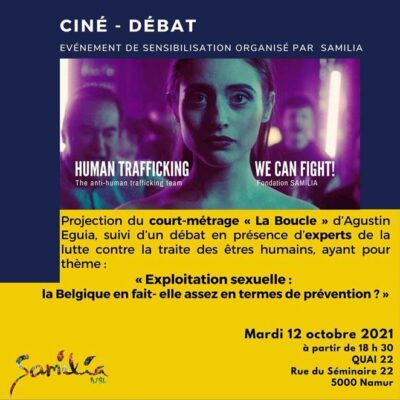
12 Oct 2021 – Film Screening & Debate: Sexual Exploitation – Is Belgium Doing Enough in Terms of Prevention?

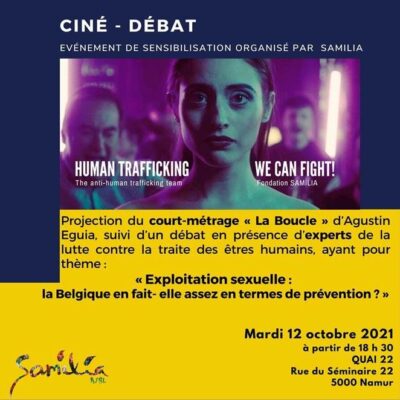
As part of its awareness campaign on human trafficking entitled “Not All Fairy Tales Have a Happy Ending,” the NGO Samilia is organising a screening and debate of the short film “La Boucle,” directed by Agustin Eguia. The film retraces the journey of a young Romanian woman exploited by her boyfriend who ends up, against her will, being exploited in the prostitution milieu.

The screening will be followed by a debate between the audience and our speakers:

  • Jean-Sébastien Jamart, former Chair of the Council of Europe’s Ad hoc Committee on Action against Trafficking in Human Beings

  • Sarah De Hovre, Director of Pag-Asa

  • Charles-Eric Clesse, Member of Samilia’s Board and Labour Auditor for Hainaut

  • Sandrine Cnapelinckx, Director of Samilia

→ Evening Programme:

  • 18:00: Welcome of participants

  • 18:30: Opening remarks by the President of Samilia

  • 18:40: Screening of the short film

  • 18:50: Introduction of the director and experts

  • 18:55: Address by Sarah De Hovre

  • 19:05: Address by Charles-Eric Clesse

  • 19:20: Address by Jean-Sébastien Jamart

  • 19:35: Q&A and open debate with the audience

Health measures will be respected: wearing a mask is mandatory.

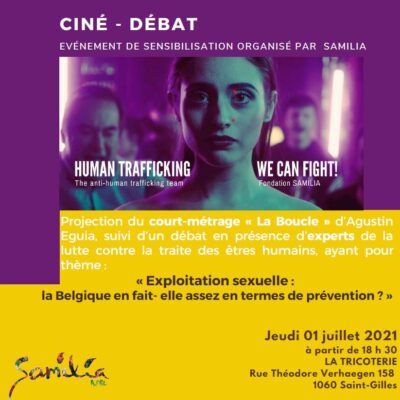
01 July 2021 – Film Screening & Debate: Sexual Exploitation — Is Belgium Doing Enough in Terms of Prevention?

As part of its awareness campaign on human trafficking entitled “Not All Fairy Tales Have a Happy Ending”, the NGO Samilia is organizing a screening and debate of the short film “La Boucle”, directed by Agustin Eguia. The film retraces the journey of a young Romanian woman exploited by her boyfriend who, against her will, ends up being exploited in the prostitution sector.
The screening will be followed by a debate between the audience and our speakers:

  • Jean-Sébastien Jamart, former President of the Council of Europe’s Ad Hoc Committee on Combating Trafficking in Human Beings

  • Charles-Eric Clesse, Samilia Board Member and Labour Auditor of Hainaut

  • Sophie Jekeler, President of Samilia

  • Sandrine Cnapelinckx, Director of Samilia

  • Agustin Eguia, film director

→ Evening schedule:

  • 6:00 pm: Welcome of participants

  • 6:30 pm: Opening remarks by the President of Samilia

  • 6:40 pm: Screening of the short film

  • 6:50 pm: Introduction of the director and experts

  • 6:55 pm: Remarks by Agustin Eguia

  • 7:05 pm: Remarks by Charles-Eric Clesse

  • 7:20 pm: Remarks by Jean-Sébastien Jamart

  • 7:35 pm: Discussion and debate with the audience

  • 8:30 pm: Informal drink

Health measures will be observed: wearing a mask is mandatory.
A bar will be open before and after the screening.

Not All Fairy Tales Have a Happy Ending

Awareness Campaign on Sexual Exploitation / 2020

Short Film

Watch here the full version of the short film directed by Agustin Eguia, who joined our efforts to combat sexual exploitation — a severe violation of human rights. This video was produced by the Belgian company 87 seconds, with the support of Wallonia-Brussels International and the Culture Department of the Wallonia-Brussels Federation. The video also received the patronage of the UNODC Blue Heart Campaign.

On 10 June 2020, Samilia received the First Prize — in the category “organizations active in the social profit sector” — at the Video Experience Day organized by AP Hogeschool Antwerp.

I Say STOP !

“I Say Stop” Awareness Campaign

Since its creation, Samilia has been an active member of the STOP GROUP, which works to combat the sexual exploitation of children and brings together other civil society actors such as ECPAT Belgium, Child Focus, Plan International Belgium , as well as the Federal Public Service Justice, Federal Public Service Foreign Affairs, the Federal Judicial Police, Defense, the Tourism Federation, and FEBETRA.

We are now launching the new awareness campaign “I SAY STOP”, aimed at reporting situations where the exploitation of minors is clearly identified, even abroad.

European Anti-Trafficking Day

October 18 marks the European Anti-Trafficking Day.
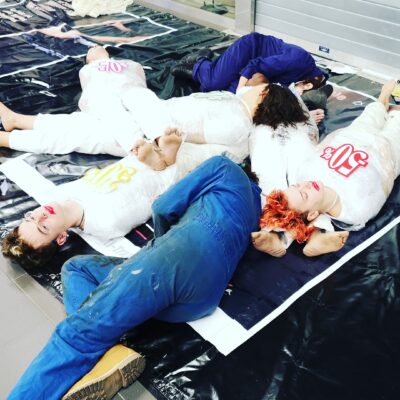
For the occasion, Samilia is partnering with artist Milva Ghenda for an exhibition denouncing dehumanization and human trafficking in this pandemic period.

COVID-19 has had devastating consequences on fundamental rights, especially for people in vulnerable situations such as victims of human trafficking. For Samilia, it was essential to collaborate with a committed artist in order to address the issue of trafficking in an artistic and sensitive way.

The exhibition dates will be announced as soon as health measures allow it. Stay tuned!

#EUAntiTraffickingDay #traitedesêtreshumains #TEH #Samilia #MilvaGhenda #Endhumantrafficking #HumanRights

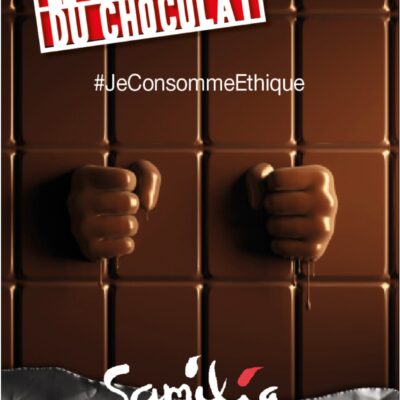
The Bitter Taste of Chocolate

Chocolate: We all love it, but we often ignore the bitter realities behind its production.

Raising awareness and acting ethically can make a difference. For every visitor supporting our initiative, we will plant a virtual cocoa tree. The image is symbolic, but it represents your invaluable commitment.

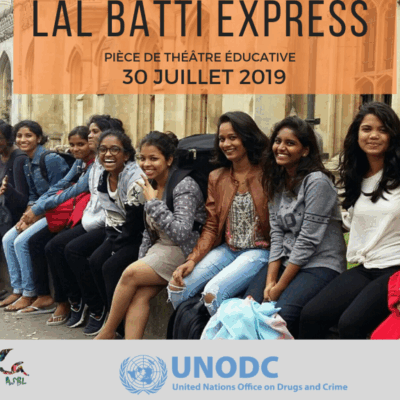
LAL BATTI Express, Theatre Play

On the occasion of World Day against Trafficking in Persons, on July 30, 2019, Samilia ASBL is organizing an exceptional and unique performance in Belgium: the theatre play “Lal Batti Express”.

The newly created Samilia ASBL aims to implement field projects for awareness-raising and prevention of human trafficking in Belgium.

Bet4Life, an initiative of the Samilia Foundation

This initiative aims to highlight the dark side of an extraordinary sporting event: human exploitation and trafficking. This campaign is in no way intended to be directed against the World Cup or any other sporting event. It is a campaign that denounces the crimes committed in the shadows. The World Cup attracts millions of fans. Unfortunately, most of these supporters are unaware that behind the smiles, the celebrations, and the breathtaking skills, some unscrupulous individuals take advantage of the situation to commit appalling atrocities: forced begging, forced prostitution, forced labor, and human trafficking. This campaign juxtaposes the thrill of the game with the horror of human exploitation. It contrasts the excitement of sports betting with the despair of human trafficking victims. The tone is deliberately provocative: betting on human suffering is horrific, we all agree. But this approach allows us to confront realities that will coexist for a month: the reality of the World Cup and that of individuals who treat others as merchandise, as currency for their own profit.

A Penny For Your Thoughts/Tatiana

Sexual exploitation awareness campaign

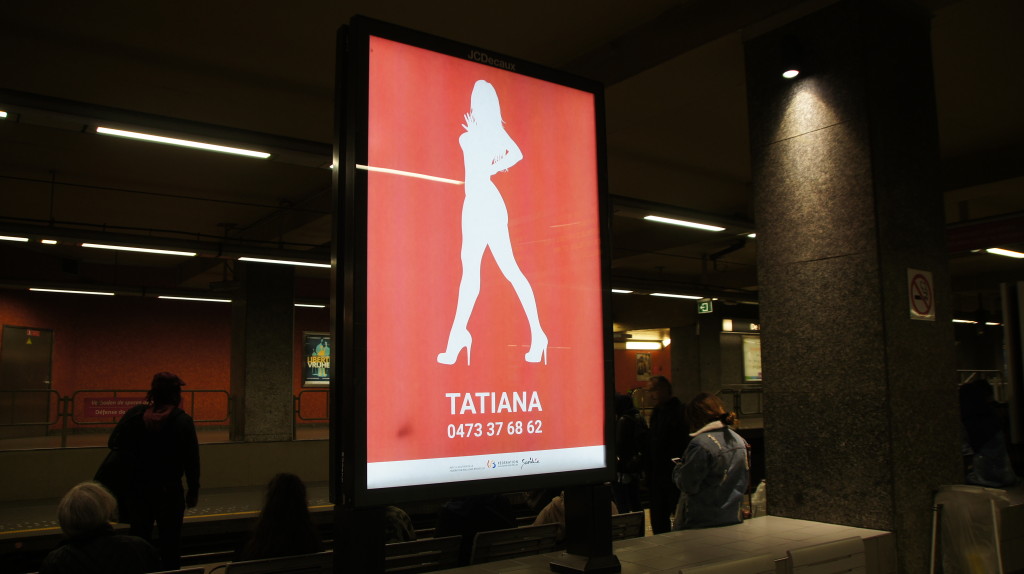
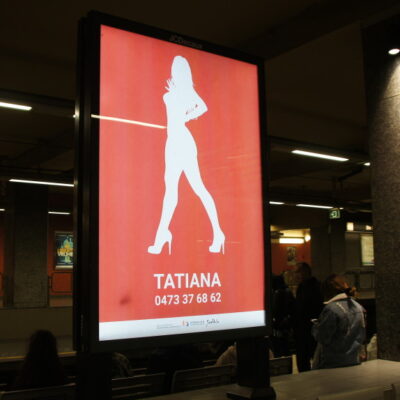
In Europe, sexual exploitation is on the rise, victims are difficult to identify, there are too few organizations working on the ground to combat exploitation, and European legislation is vague and/or contradictory from one country to another. As a result, traffickers slip through the net and use methods to coerce their victims that are unknown to the general public and therefore to potential users of these services. A striking poster appeared for a month on the walls of six European cities, including Brussels. A provocative silhouette, a first name, and a phone number were its only elements. Behind the Belgian number, Tatiana, a victim of sexual exploitation, tells her story and invites everyone to leave a comment, “a thought.” This campaign was rolled out simultaneously in six European cities: Brussels, Paris, Bucharest, Sofia, Dublin, and Lisbon. The creator of this unusual awareness campaign about sexual exploitation is Marian van der Zwaan, a Dutch artist committed to fighting discrimination against women and immigrants. Through research and interviews with victims and those working on the ground, Marian van der Zwaan exposes the social problems of our time. Her work has received support from Amnesty International, the United Nations, and various governments.
Tatiana « A penny for your thoughts »

Awareness campaign / 2017

In Europe, sexual exploitation is on the rise, victims are difficult to identify, there are too few organizations working on the ground to combat exploitation, and European legislation is vague and/or contradictory from one country to another. As a result, traffickers slip through the net and use methods to coerce their victims that are unknown to the general public and therefore to potential users of these services.
A striking poster appeared for a month on the walls of six European cities, including Brussels. A provocative silhouette, a first name, and a phone number were its only elements. Behind the Belgian number, Tatiana, a victim of sexual exploitation, tells her story and invites everyone to leave a comment, “a thought.” This campaign was rolled out simultaneously in six European cities: Brussels, Paris, Bucharest, Sofia, Dublin, and Lisbon. The creator of this unusual awareness campaign about sexual exploitation is Marian van der Zwaan, a Dutch artist committed to fighting discrimination against women and immigrants. Through research and interviews with victims and those working on the ground, Marian van der Zwaan exposes the social problems of our time. Her work has received support from Amnesty International, the United Nations, and various governments.