OUR ACTIONS
1. Awareness
The training is primarily designed to educate company management and employees about human trafficking in supply chains. It does not target a specific group or industry and aims to raise awareness of large-scale trafficking. The course will cover three aspects: What is human trafficking? Why does human trafficking exist? How can we combat human trafficking?
Due to the complex nature of global supply chains, many companies do not know the origin of the components or ingredients in their products. This makes it difficult to protect against forced labor in their supply chains and allows exploiters to remain hidden.
2. Case studies and recommendations
Human trafficking is often hidden and difficult to detect. However, there are some warning signs or red flags that could indicate a person is a victim of trafficking, and these will be examined as part of the training. The course will also take a closer look at what businesses and consumers can do to reduce the demand for cheap labor and mitigate the risks of labor exploitation. It will also explore the possibility of implementing social inclusion programs for trafficking survivors.
Case studies of companies that have taken effective steps to combat human trafficking by implementing a specific program and/or initiative to promote the social inclusion of trafficking survivors will be analyzed.
The training will result in:
- The creation/signing of a Code of Conduct
- A training certificate
- A certification (for which we are still seeking a partner)
The Samilia Foundation can also help companies implement a social inclusion program for victims of human trafficking or for at-risk groups.
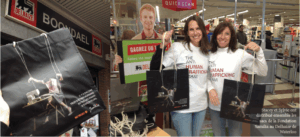
An awareness campaign conducted in partnership with DELHAIZE, extending the European project: a comprehensive corporate toolkit for addressing demand for human trafficking
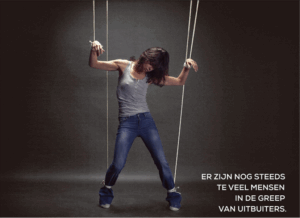
During the “Bag” campaign, held as part of “Anti-Trafficking Day” on October 18, 2015, the visual attracted considerable attention, notably from the Boomerang communications agency, which approached Samilia to create a “Postcard” campaign. Postcards were then produced in partnership with the non-profit organization Pag-Asa and distributed in 70,000 copies, in French and Dutch, throughout the Brussels region, primarily in cinemas, restaurants, and other high-traffic areas. This campaign ran from December 29, 2015, to January 11, 2016.
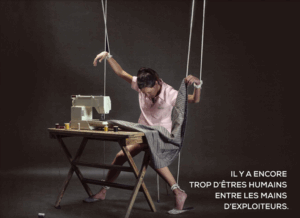
Samilia’s team and its dedicated volunteers distributed 10,000 bags in 10 Delhaize Group stores in Brussels and Walloon Brabant. This action, on October 19, 2015, was part of a consumer awareness program on human trafficking within the framework of a European project. Awareness posters were also placed in all the break rooms of employees in the chain’s 146 stores across Belgium and Luxembourg. The poster was designed by the Brussels-based agency J. Walter Thompson, which generously provided Samilia with four in-house staff to quickly deliver a striking image based on the idea of a puppet whose strings we, the consumers, are all holding.
As part of a project funded by the European Commission, Samilia has developed specific tools for companies whose objective is to raise awareness and sensitize at all levels of decision-making, company leaders and other employees to the problem of human trafficking for the purpose of economic exploitation and forced labor.
The aim of the European project is to raise awareness, make companies more responsible and encourage them to get involved in the fight against human trafficking, mainly in the value chains of the products they develop or the services they use.
The Samilia Foundation has been able to realize the desire of companies to follow a more ethical and humanly responsible path, but also the need to have concrete tools to fight against this modern slavery.
As part of this effort to raise companies’ awareness, the Samilia Foundation has been awarded a European project entitled Comprehensive Corporate Toolkit to Address Demand for Human Trafficking.
The objectives of this project are threefold:
- to make companies aware of the risk of slavery in their value chain
- to encourage companies to develop responsible practices, from the basic product to the finished product
- to encourage social inclusion programs for former victims of trafficking by offering them training and stable employment, and to support businesses in these initiatives.
To this end, the Foundation, in collaboration with Not For Sale, an Amsterdam-based NGO, has created the following tools:
- An online tool to raise employee awareness within companies
- A cross-analysis of companies’ social inclusion needs
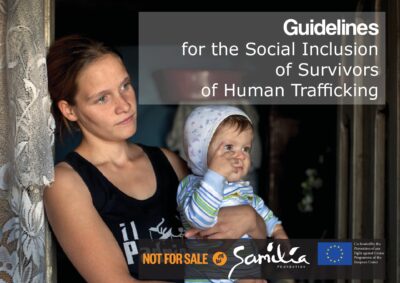
- Guidelines for the positive and successful social inclusion of victims within the company
- Ethical guidelines for production lines
- A video to raise awareness of trafficking
- A website containing all the tools
The social inclusion project was initiated with Delhaize Group in Romania, Bulgaria and Greece. This project proposes to develop professional integration programmes for victims of human trafficking or potential victims (vulnerable women at high risk) within the shops with the support and collaboration of local NGOs in charge of monitoring the candidates: Mega Image (Bucharest) and Picadilly (Sofia), Alpha Beta (Thessalonica), all three belonging to Delhaize Group. Delhaize Serbia is also interested in developing such programs within their shops.
Delhaize Europe has been challenged by the issue of human trafficking and is working with the Samilia Foundation to develop awareness and information workshops for the staff of their shops in the Balkans. The workshops take place in Belgium, Romania and Greece and bring together several dozen nationalities.
In 2016, the Samilia Foundation and Not For Sale launched the online awareness tool aimed at raising employees’ awareness of the issue of human trafficking. Initially this online training was taken by one thousand Delhaize employees. The training is now available to other companies and individuals. Employees from Interparking’s Brussels head office also took part.
Comprehensive Corporate Toolkit for Addressing demand of human trafficking
Tools to educate

Human Trafficking Awareness Guidelines