The Samilia Foundation was made aware by Frédéric Loore’s investigation of the extremely precarious situation of young football players, mainly from West Africa, recruited by
pseudo-agents who easily persuaded them to come to Belgium to fulfill their dream of playing for a “big” club. Some went into debt to the tune of several
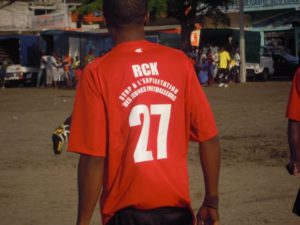
thousands of euros. Arriving in Belgium without papers or contracts, they then begin a journey of survival and wandering, sometimes marked by economic exploitation that can be described as
human trafficking. Most of these young people are unable to return to Africa because, in addition to the costs involved, the feelings of shame and failure that overwhelm them, as well as the fear of never being able to leave their homeland, it is above all the pressure from their families, for whom they are on an “economic mission,” that condemns them to an exile with no return.
cauchemar de ballon rond
After conducting an aid and support program in Belgium for a target group made up of some of these young footballers, the Samilia Foundation realized the urgent need to develop prevention initiatives in the countries of origin.
IN AFRICA
In 2014, the Samilia Foundation carried out a 9-month mission in Africa (Ivory Coast, Benin, Senegal and DRC), using a multidisciplinary team trained to carry out this project and composed of a criminologist, a specialized educator and a psychopedagogue.
In each of the countries visited, for three months, the team met with young footballers directly on makeshift pitches and in academies for prevention workshops using tools created by the Samilia Foundation.
They collaborated jointly with the various African football federations. The team also created a network of institutional contacts with the relevant authorities and key players in civil society (Ministry of Sports and Recreation, embassies, football clubs, NGOs, journalists, etc.).
240 days in West Africa
From February to October 2014, a team of volunteers stayed in Ivory Coast (Feb-Apr), Benin (May-June) and Senegal (July-Oct) to implement the “Football Against Trafficking” program developed with the help of experts.
Jonas Grétry (criminologist), Nicolas Franchomme (journalist), Guillaume Gille (educator) and François Dumont (psycho-pedagogue) raised awareness
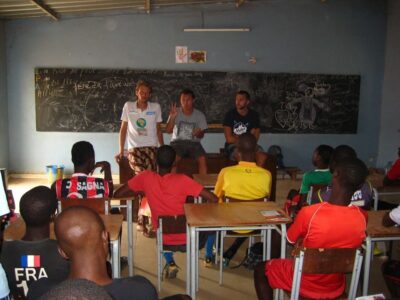 several thousand young people participated directly on football pitches, in clubs and academies, through half-day workshops. They worked closely with various football federations, sports ministers, and local media. This program was co-financed by Wallonia-Brussels International.
A brochure, available here, was produced by the four volunteers and used in their awareness-raising work.
The Samilia Foundation decided to take action to raise public awareness of this issue and develop preventative initiatives. On September 10, 2012, with Aloys Nong, striker for RAEC Mons and sponsor of our initiative, and with the support of Decathlon-Anderlecht, we met with these young people who have been training for a long time, to provide each of them with a complete set of brand-new football equipment so they could train in proper conditions.
But we wanted to go beyond this symbolic gesture. In partnership with the ISEI nursing school, two fourth-year nurses specializing in community health began a six-week internship aimed at establishing a medical clinic for young football players. Many suffer from injuries related to intense activity in poor conditions, and most have never consulted a doctor.
On the legal front, we have also brought together various actors in the fight against human trafficking: magistrates, police officers, the Pag-Asa reception center and the journalist Frédéric Loore, author of the investigation “The Damned of Football”, to develop a strategy that would both identify and apprehend the perpetrators of this trafficking, and protect and support the victims.
To encourage this initiative, on December 4, 2012, the SAMILIA Foundation was presented with the Ethics in Sport award by Minister André Antoine during the grand evening of the Sports Merit awards of the Wallonia-Brussels Community.
Based on this work, the Foundation formulated recommendations, which were presented at a conference in the European Parliament. Some of these recommendations were incorporated into the Resolution aimed at combating the trafficking and exploitation of young foreign football players in Belgium, adopted on April 28, 2015, by the Parliament of the Wallonia-Brussels Federation. Based on these recommendations, a working group was convened at the request of the Immigration Office.
- The resolution of the Parliament of the Wallonia-Brussels Federation
On March 17, 2015, a proposed resolution aimed at combating the trafficking and exploitation of young foreign football players in Belgium was tabled at the initiative of Patrick Prévot and co-signed by several other members of parliament. This text situates the issue within the framework of respect for human rights, sport and ethics, the protection of young people, international law, and workers’ rights. Called upon for its expertise, the Samilia Foundation was closely involved in drafting this text and is cited several times as a leading player in this field.
Passed on April 29 in plenary session, the resolution constitutes a genuine action plan to combat the trafficking and exploitation of young non-EU athletes.
In this context, the Samilia Foundation continues its work of analysis and raising awareness within the football community and the political sphere with a view to improving existing legislation on the minimum wage, the transfer of minors between the ages of 16 and 18, and access to the profession of player agent.
In collaboration with the IOM, the Samilia Foundation has begun an international analysis of the subject, based on an IOM note entitled “Ethical recruitment of migrant workers and football: Perspectives for partnership“.
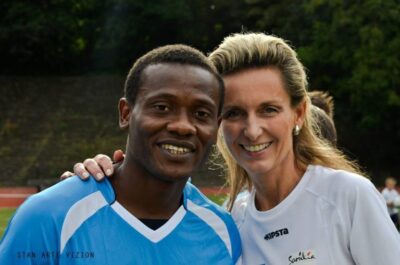 In November, we traveled to the DRC to conduct a pilot project within the same framework; in collaboration with the non-profit organization Friendly Foot, we led about ten prevention workshops with disadvantaged youth and children in Kinshasa. We also organized the opening of the “Mark or Die” exhibition at the Bilembo cultural center, made available to us by the company TEXAF.
IN BELGIUM
In 2015, the Samilia Foundation focused its efforts in Belgium using various tools, prioritizing local collaborations to raise awareness and inform a larger number of people about the different realities of human trafficking in the football world.
The Wheel
The bond of trust that the Samilia Foundation has established since 2012 with the target audience of young African players at La Roue has allowed for a deeper understanding of their individual journeys. The Samilia Foundation has structured its support work to develop concrete prospects for the young African footballers who end up at La Roue.
This group of about fifty people meets every morning on a pitch in the municipality of Anderlecht to train under the guidance of a Cameroonian coach. We work with this target group to better understand the issues, the traffickers’ modus operandi, and the experiences of their victims. This has enabled us to develop tools for the prevention program as well as the “Football Against Trafficking” awareness campaign.
During 2015, we established a partnership with the non-profit organization Friendly Foot (http://www.friendlyfoot.be/?action=presentation) and the Public Social Welfare Centre (CPAS) of the municipality of Saint Gilles to secure an Article 60 contract for the Cameroonian coach of the La Roue team. Indeed, stabilizing the La Roue coach’s administrative situation is a fundamental prerequisite for supporting the target group in the medium term.
Exhibition “Mark or Die”
The book “Mark or Die” brings together the texts of three reports that journalist Frédéric Loore dedicated to all “the rejects of the football world who end up on the vacant lots of Europe or Asia.” Accompanied by photojournalist Roger Job, they set out to meet them, first in Belgium, then in Ivory Coast and Thailand. This striking report was awarded the 2013 Journalism Prize by the Parliament of the Wallonia-Brussels Federation and the prestigious 2012 Nikon Press Photo Award. The photographs taken from this long-term project, carried out between 2011 and 2014, are featured in the exhibition “Mark or Die!”, designed by Antonio Nardone.
“Mark or Die”
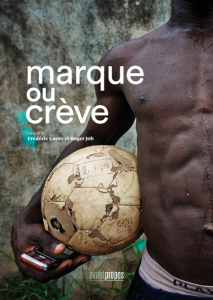 Book available for purchase from the Samilia Foundation via info@samilia.org for €25
Closely involved in the book’s distribution, the proceeds of which are donated to the Foundation, the Samilia Foundation organized its installation in several symbolic locations: Anderlecht (October 2014), Kinshasa (November 2014), Sporting Charleroi (March 2-13, 2015), Mouscron (March 24-31, 2015), the European Parliament (April 13-17, 2015), and the Ebony Shoe Award Ceremony (May 11, 2015). Other dates are already planned, including January 2016 when the exhibition will be on display in the atrium of the Parliament of the Wallonia-Brussels Federation.
Screenings and discussions: “The Zebra’s Stripes”
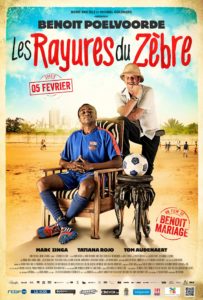
Released in February 2014 and critically acclaimed, Benoît Mariage’s latest film, “The Zebra’s Stripes” is far from the lighthearted comedy the trailer might suggest.
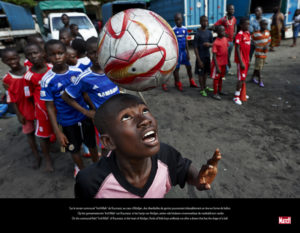 Dozens of young footballers from across the African continent (Ivorians, Cameroonians, Guineans, Senegalese, etc.), alone, penniless, and often undocumented, live in Europe relying on resourcefulness and solidarity. Victims of unscrupulous agents, sometimes outright human traffickers, or simply lured by the mirage of a professional career in Europe, they desperately await a better life. To better understand the reasons that drive them to risk everything to reach what they believe to be the El Dorado of football, journalist Frédéric Loore and photographer Roger Job traveled to Abidjan, Ivory Coast, the hallowed ground of African football.
On the contrary, “The Zebra Stripes” tackles essential themes and asks the right questions, the kind that make you think… The relationship between Europe and Africa is addressed frankly and without embellishment.
This allows us to understand the context in which young African football players fall prey to unscrupulous traffickers posing as legitimate recruiters.
In collaboration with the film’s producers, the Samilia Foundation organized several special screenings, followed by discussions moderated by Jean-Charles De Keyser and attended by various members of the film crew (Marc Zinga, Serge Trimpont) as well as prominent figures in Belgian football: Nordin Jbari, Pierre Kompany, Aloys Nong, Bea Diallo, and others.
In 2015, the Samilia Foundation continued to organize screenings of “The Zebra Stripes” in partnership with local socio-cultural organiza
tions:
March 24 at the Demeyère Auditorium of the Marius Staquet Cultural Center in Mouscron, in collaboration with Christiane Vienne, president of PAC Mouscron (Présence et Action Culturelle)
April 2 at the Soignies Cultural Center, in collaboration with PAC Soignies
The quality and necessity of this support were confirmed by the first complaint filed for human trafficking and illegal employment of foreign workers. by a young African footballer.
This is a major step forward in the fight against exploitation and human trafficking in football, because until now, alleged victims feared losing any chance of succeeding in Belgian football if they reported the club exploiting them. Furthermore, the fact that Belgian law requires victims to leave the environment in which they were exploited makes them fear they will never be able to play again.
This case, currently under investigation by the Brussels Public Prosecutor’s Office, illustrates how football club executives circumvent the law, particularly the minimum wage law, and keep a player in a situation of exploitation. This case also highlights the flaws in document checks during matches. These are all problematic factors already raised by the Samilia Foundation; the Foundation is therefore closely monitoring this case and supporting the victim, in collaboration with Pag-Asa and in consultation with his lawyers.