On July 30, 2020, the Samilia Foundation, in partnership with UNODC, wished to
honor the people on the front lines.
This year, the theme of the World Day Against Trafficking in Persons honors frontline workers—those who are first to respond to stop this crime. These are men and women working in various fields who identify, support, advise, and assist victims, or work to hold traffickers accountable.
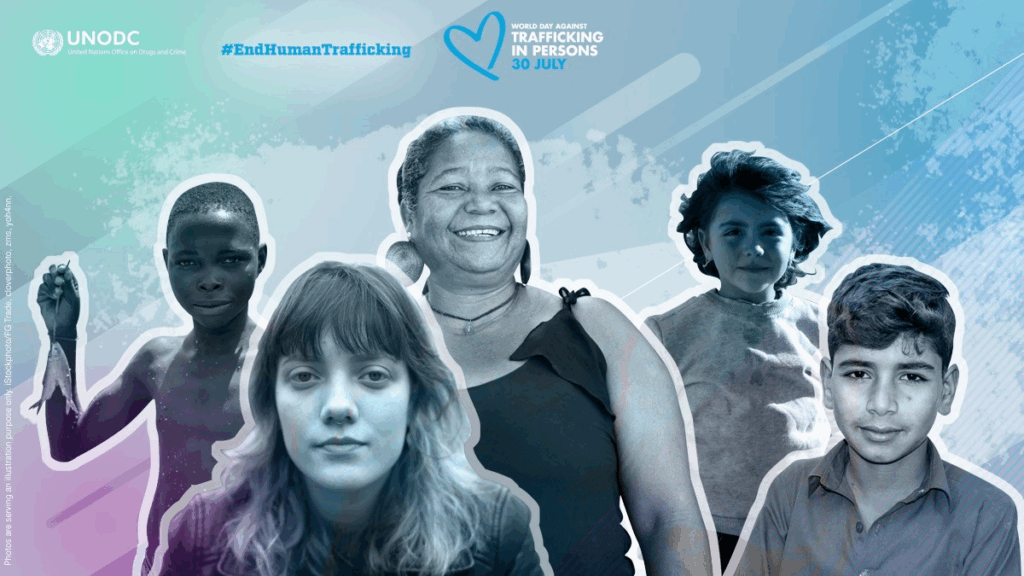
Around the world, the COVID-19 pandemic has highlighted the importance and role of frontline workers, while movement restrictions imposed by many governments to counter the coronavirus have made their work increasingly complex.
Through the stories of frontline responders describing their work with victims, we aim to highlight their contribution, as well as that of their institutions, organizations, and teams, in the fight against human trafficking: law enforcement officers, social workers, healthcare professionals, NGO staff, and many others, all working to protect vulnerable individuals.
This day provides an opportunity to share positive messages, showcasing the vital work of these frontline responders and emphasizing the need to support and continue their efforts. Testimonials also highlight how these workers continue to fight human trafficking during the COVID-19 pandemic.
Join the Day and Follow These Stories on Social Media! #EndHumanTrafficking
Overview of the Day:
On the World Day Against Trafficking in Persons, communities across Belgium come together to honor the work of frontline responders in the field of human trafficking. These individuals work in various sectors: identifying, supporting, advising, and seeking justice for trafficking victims, as well as challenging traffickers’ impunity. With the ongoing COVID-19 crisis, the role of frontline responders has become even more critical. Nevertheless, their contributions are often overlooked and underappreciated. “Gaining the trust of victims is essential to ensuring justice and punishing perpetrators,” says Koen Geens, Minister of Justice. 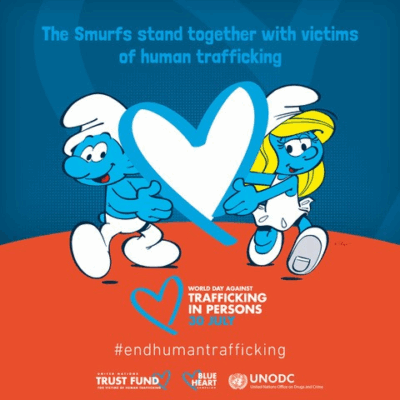
Belgium has long been at the forefront in combating human trafficking. By leading global efforts through the United Nations, Belgium supports the provision of essential financial, humanitarian, and legal assistance directly to victims in countries of origin, transit, and destination.
Through its participation in the Blue Heart Campaign against human trafficking, Belgium joins countries around the world in sending a clear message. Given the transnational implications for human security and international stability, solidarity with victims of human trafficking is essential. “Human trafficking is a global threat that requires a global response,” stated Philippe Goffin, Minister of Foreign Affairs and Defense.
Manneken-Pis Commits to Ending Human Trafficking
À cette occasion, la figure clé du folklore bruxellois, Manneken-Pis, reçoit de l’Office des Nations Unies contre la drogue et le crime (ONUDC) son 1 047e costume inspiré de la Campagne Cœur Bleu. Le costume est dévoilé au grand public, à midi le 30 juillet, en présence de l’Ordre des Amis de Manneken-Pis, amis et partenaires unis dans la lutte contre la traite des êtres humains. Sont présents le gouvernement belge représenté par les ministères de la Justice et des Affaires étrangères et de la Défense, le Centre fédéral des migrations Myria, la police fédérale, les centres d’hébergement spécialisés pour les victimes PAG-ASA et Payoke, la Fondation Samila, les Panthères rouges, les Schtroumpfs, et bien d’autres. 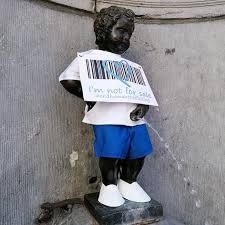 « L’audace de Manneken-Pis est celle d’un enfant libre dans une ville libre qui ne tolère pas l’oppression. Le nouveau costume ” Blue Heart ” a sa place dans la garde-robe de notre petit bonhomme. Nous sommes particulièrement heureux d’impliquer la Ville de Bruxelles, dont il est le symbole, dans la lutte contre toutes les formes de traite et d’exploitation des êtres humains », déclare Philippe Close, bourgmestre de la Ville de Bruxelles. Le directeur de la Division de l’analyse des politiques et des affaires publiques de l’ONUDC, M. Jean-Luc Lemahieu, déclare que « le soutien de Manneken-Pis à la lutte mondiale contre la traite des êtres humains est emblématique et envoie un message puissant. Non seulement cela montre l’engagement de la Ville de Bruxelles à déployer des efforts communs contre ce crime odieux, mais il souligne également la nécessité fondamentale de protéger les enfants, qui sont les victimes les plus vulnérables du monde ».
Ombres : les victimes ont des noms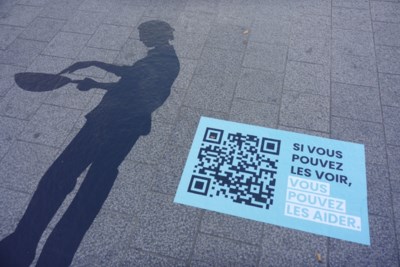
During this day, the shadows of victims will be represented on the ground at the Carrefour de l’Europe in Brussels. With this initiative, PAG-ASA (the specialized shelter for trafficking victims based in Brussels) aims to symbolically reveal the presence of thousands of exploited victims in Belgium. A QR code allows viewers to access the stories of the victims behind the shadows. PAG-ASA staff and volunteers will alert passersby to raise awareness of the proximity and ubiquity of this crime. “Every year, we support more than 200 victims in their recovery process, but today we are here especially for all the invisible victims who remain in the shadows. We hope to open people’s eyes to see the victims and call for support,” says Sarah De Hovre, Director of PAG-ASA.
Cities in Blue to Denounce Exploitation
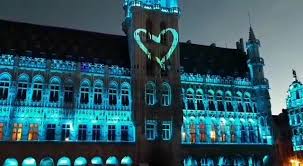 Au coucher du soleil, les villes de Bruxelles, Bruges et Gand éclaireront en bleu leurs hôtels de ville et autres bâtiments emblématiques pour inciter les gouvernements, la société civile, le secteur privé et les particuliers à agir. La couleur bleue fait référence au cœur bleu, le symbole international contre la traite des êtres humains, représentant la tristesse de ceux qui en sont victimes tout en nous rappelant la froideur de ceux qui achètent et vendent des êtres humains.
Protocol to Prevent, Suppress and Punish Trafficking in Persons, Especially Women and Children
Human trafficking is a serious crime and a violation of human rights. Each year, thousands of men, women, and children fall into the hands of traffickers in their own country or abroad. All states are affected by human trafficking, either as countries of origin, transit, or destination for victims. The United Nations Office on Drugs and Crime (UNODC), guardian of the UN Convention against Transnational Organized Crime and its related protocols, assists states in implementing the Protocol to Prevent, Suppress and Punish Trafficking in Persons.
The Protocol to Prevent, Suppress and Punish Trafficking in Persons, Especially Women and Children, was adopted by UN General Assembly Resolution A/RES/55/25. It is the first international legal instrument to include a consensual definition of human trafficking. The aim of this definition is to facilitate alignment of national approaches to establish criminal offenses that allow effective international cooperation in prosecuting trafficking cases. The Protocol also aims to protect and assist victims of trafficking in accordance with their fundamental rights.
The United Nations General Assembly proclaimed July 30 as World Day Against Trafficking in Persons in Resolution A/RES/68/192.

