Do you believe you may be a victim of trafficking?

Do you believe you may be a victim of trafficking?

( 0 out of 5 )

Awareness campaign on economic and domestic exploitation / 2022

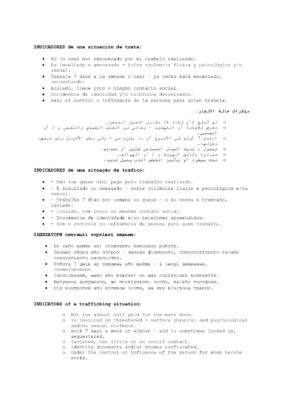
  • Not paid (or barely paid) for the work performed.

  • Is insulted or threatened – subjected to physical, psychological, and/or sexual violence.

  • Works 7 days a week or nearly – and is sometimes locked in or held captive.

  • Isolated, with little or no social contact.

  • Identity documents and/or phones confiscated.

  • Under the control or influence of the person for whom he/she works.

Trafficking for the purpose of economic and domestic exploitation.

What exactly does it involve?

Human trafficking is the third largest form of trafficking in the world, after drugs and weapons. Its market is estimated at 150 billion dollars per year. According to the Global Slavery Index, this form of modern slavery affects 40 million people every year. In Belgium, estimates from this Global Index indicated around 23,000 victims in 2018, while human trafficking continues to expand. The majority of victims therefore remain part of a large “hidden figure.”

The Boréalis case shows that economic exploitation is happening right at our doorstep and is not limited to trafficking on construction sites located in non-democratic countries such as Qatar. This issue should be considered a political priority, as human trafficking is increasing in the context of wars and/or crises that deepen the growing precariousness of populations.

The cleaning sector is not spared: victims of human trafficking are found among domestic cleaners, industrial and corporate cleaning staff, window washers, household staff of foreign diplomats… and even some “au pairs.” This reality was demonstrated through the investigative work of journalist Frédéric Loore in the cleaning sector, awarded the “Samilia Prize” in 2021. (You can find more videos at the bottom of the page.)

Who are the victims?

Most victims are vulnerable individuals, often undocumented. Unpaid for the work they perform and under the control of their employer, some victims have their passports confiscated, while others are held captive and subjected to physical, psychological, and sexual violence. In all cases, the exploiter enriches themselves at the expense of the victims’ health, physical and mental integrity, human dignity, and rights. The fear of retaliation is especially strong among victims who are socially isolated, unfamiliar with the country’s language and laws.

Finally, subcontracting—very common in many sectors—encourages the development of opaque labour networks, while the limited financial and human resources allocated to combating trafficking in Belgium make it difficult to detect most victims and to effectively punish traffickers.

Our awareness-raising tools in this campaign

On 18 October, the European Day Against Human Trafficking, an awareness-raising day is organized. Here are the various tools used to inform and engage the general public on this issue:

▪  Display panels in 160 showcases across the 16 busiest STIB stations in Brussels, from 15 to 18 October.

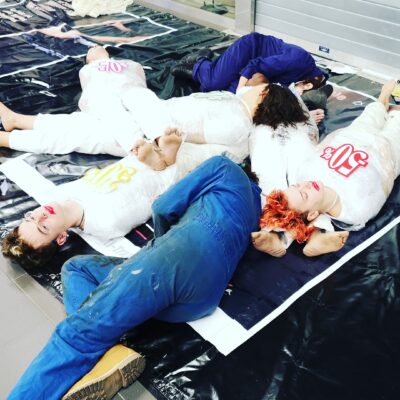
▪  Three artistic performances of about fifteen minutes each, carried out by two actresses and one actor in public spaces. A staged scene will illustrate indicators of trafficking experienced by a domestic cleaner and an employee of an industrial cleaning company. Climactic music and a minimalist set design will highlight the performance. The performances will take place at:

  • Place du Luxembourg (1:00–1:30 pm)

  • Place Rogier (2:30–3:00 pm)

  • Place de la Monnaie (4:00–4:30 pm)

▪   Distribution of cleaning products with a label featuring a “warning” message to raise awareness about the issue, in line with a key recommendation from Myria (2020 Report on Domestic Exploitation). Large manufacturers and distributors of household products remain insufficiently aware of this issue.

MYRIA : quelles pistes pour une meilleure protection des victimes ?

Lastly, hundreds of awareness-raising flyers will be distributed in partnership with the Domestic Workers’ League.

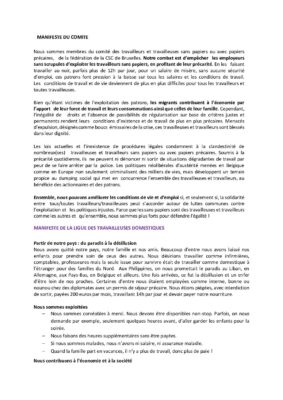
CSC Brussels, the Committee of Undocumented Workers, and the Domestic Workers’ League provide support to undocumented workers and to victims of exploitation and abuse by their employers, with the aim of defending their rights.

The Committee of Undocumented Workers and the Domestic Workers’ League organize actions to improve the situation of undocumented workers and advocate for legal reforms to obtain residence rights.

En savoir plus le manifeste de la Ligue des Travailleuses

All campaign materials include a QR code linking to Samilia’s website, which provides additional information and useful phone numbers for victims.

QR CODE

https://dossiers.parismatch.be/trous-noirs-dans-lunivers-du-travail/


Excerpt from testimony:
Domestic exploitation by a diplomat: Tamara, victim of trafficking

“Working off the books is not the oldest profession, but the most degrading one in the world.”

“Tamara, 45 years old, without family, comes from a non-European country, which we will not name to protect her. In 2003, she arrived in Belgium in the luggage of a diplomat, hired under contract to be the nanny of the diplomat’s daughter during her three-year posting in Brussels. In 2006, when her employer’s diplomatic mission ended, she chose not to leave. Finding herself on the streets, without legal residency and with no means of support, she learned from an acquaintance that a wealthy couple was looking for a domestic worker and that they ‘were not the type to ask questions.’ Indeed, they asked none: ‘They knew I didn’t have papers, but it didn’t bother them. I wasn’t the first. Madam told me she would take me without a contract, for 1,000 euros a month. In exchange, I had to handle the cooking and cleaning. There was already an African butler living in an outbuilding—it was huge. I accepted,’ Tamara recalls.”

The initial reception was rather friendly. But the young woman was quickly reduced to the status of a servant: “I worked from morning to night, every day, weekends included. I got up early to prepare their breakfast and went to bed late after having to clean, wash, iron, cook, and take care of the husband, who was not in good health and lived secluded in a wing of the house. Madam was very strict with me. I was housed in the attic, in a completely empty room. It looked like a cell. I felt like a prisoner.”

The owner of the house made several trips to Italy. In her absence, Tamara was ordered not to go out under any circumstances, not to use the phone, to feed the two dogs, and to watch over the husband. “I never knew when she would return. She left food for the dogs and the husband, but nothing for me. I would stand in front of an empty fridge and I almost fasted—sometimes for several consecutive days.”

After a month of this treatment, Tamara decided that regaining her freedom was worth the risk of ending up back on the street. Taking advantage of another absence from the tyrannical employer, she chose to ask for her pay and leave. “I went to see the husband, told him I was leaving, and asked for the 1,000 euros promised for the month of work. He replied that he owed me nothing. I insisted. He opened his wallet and gave me 150 euros. I understood I would get no more. I was trapped anyway. I took the money, and the butler drove me to Brussels with my suitcase. After that, I never heard from them again. But I imagine others went through the same thing after me.”


Excerpt from testimony:

Economic exploitation in a window-cleaning company ;

Levan, a worker in the shadows

Levan (a pseudonym) knows this all too well. Georgian, in his thirties, he grew up in a region bordering Turkey. Two years ago, he decided to join a cousin living in Belgium. The promise of a possible job pushed him to leave his family behind and, he hoped, the dark days as well.

Upon his arrival in Brussels, reality caught up with him, and his dreams of a European Eldorado vanished. Weeks, then months passed. His tourist visa expired, and Levan found himself without legal residency. Covid appeared, and his future suddenly narrowed.
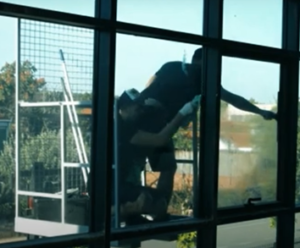
Cornered, he was offered a deal one day, over a cup of tea on a café terrace in “Little Anatolia.” Despite the code of silence of his world, he recounts: “A Turkish acquaintance who runs a company offered me a job as a window cleaner. Since I didn’t have papers, he told me I would have to work under the name of one of his workers who looks like me and who has a valid residence permit. I didn’t know anything about this work, but I accepted—I had no choice.”

Levan’s account cannot be objectively verified, but what he describes resembles the well-known technique of “lookalike” fraud, which consists of exploiting physical resemblance between two individuals to evade inspections. “It’s been more than a year now. I work everywhere, in Brussels and elsewhere. Sometimes at night. It’s very tiring. The manager pays me 800 euros a month in cash. I’m afraid of checks, but so far, I’ve avoided them.”

Levan’s story shows a clear intent to commit fraud on the part of those exploiting him. “In this field, we are clearly dealing with a well-organized system,” confirms Sibille Boucquey. “This organisation is often family-based. Now, is it also criminal according to the definition of the Penal Code? We have reasons to believe so in certain cases, but it must be proven—and that is the difficulty.”

Excerpt from testimony :

Domestic exploitation of a young au pair :

Anna, a girl made to do everything