Business Against Slavery

Business Against Slavery

( 0 out of 5 )

Business Against Slavery (« BAS ») est une formation destinée aux entreprises. En tant que producteurs internationals, les entreprises interagissent souvent avec un grand nombre de fournisseurs et de travailleurs dans le monde entier. Pour cette raison, les entreprises peuvent jouer un rôle vital dans la lutte contre la traite des êtres humains en se prémunissant contre les abus de main-d’œuvre dans leurs chaînes d’approvisionnement et en veillant à ce que les travailleurs reçoivent un salaire décent. Les entreprises ont une occasion unique d’aider à transformer les travailleurs pauvres et vulnérables en travailleurs autonomes, réduisant ainsi leur risque d’être victimes de la traite et de l’exploitation des êtres humains.

Aujourd’hui, l’image de l’entreprise est étroitement liée à la chaîne d’approvisionnement et au respect des droits de l’homme, de la matière première au produit final. Par ailleurs, il est de plus en plus important pour les clients de savoir d’où viennent leurs achats mais aussi dans quelles conditions ils ont été fabriqués ou d’où ils sont issus. Il est donc primordial de construire une image qui reflète cette réalité dans un monde gouverné par les médias et les réseaux sociaux en particulier.

La transparence de la chaîne d’approvisionnement est un sujet souvent évoqué dans la presse et devrait faire partie des politiques de RSE. Il présente un intérêt en termes de durabilité ainsi qu’en termes d’image et de marketing.  Les chaînes d’approvisionnement peuvent être exposées au risque de traite des êtres humains avec actuellement 49 millions de victimes, dont une partie est exploitée – forcée de cueillir le cacao pour notre chocolat, d’extraire le métal pour notre téléphone, etc.

La traite des êtres humains est spécifiquement interdite par l’article 5 du chapitre des droits fondamentaux de l’Union européenne. Les domaines à haut risque pour la traite des êtres humains – outre l’industrie du sexe – se trouvent dans l’agriculture, l’exploitation minière, la construction et le tourisme.  De nos jours, les entreprises doivent s’assurer d’être en avance sur la concurrence et d’être proactives plutôt que réactives dans l’approvisionnement et la production éthique, de la matière première au produit final. Cela peut impliquer d’aller même au-delà de la signature des codes de conduite et des politiques de RSE des entreprises, par exemple en mettant en œuvre des programmes d’inclusion sociale pour les survivants de la traite des êtres humains.

NOS ACTIONS

1. Sensibilisation

La formation est principalement conçue pour éduquer la direction et les employés de l’entreprise sur la traite des êtres humains dans les chaînes d’approvisionnement. Il ne cible pas un groupe ou une industrie spécifique et vise à sensibiliser à la traite à grande échelle. Le cours portera sur 3 aspects- Qu’est-ce que la traite des êtres humains ?- Pourquoi la traite des êtres humains existe-t-elle ?- Comment lutter contre la traite des êtres humains ?

En raison de la nature complexe des chaînes d’approvisionnement à l’échelle mondiale, de nombreuses entreprises ne connaissent pas l’origine des composants ou des ingrédients de leurs produits. Il est donc difficile de se prémunir contre le travail forcé dans leurs chaînes d’approvisionnement et il est facile pour les exploitants de rester cachées.

2. Études de cas et recommandations

La traite des êtres humains est souvent cachée et difficile à détecter. Cependant, il existe quelques signes avant-coureurs ou drapeaux rouges qui pourraient indiquer qu’une personne est victime de traite et qui seront étudiés dans le cadre de la formation. Le cours examinera également de plus près ce que les entreprises et les consommateurs peuvent faire pour réduire la demande de main-d’œuvre bon marché et atténuer les risques d’exploitation par le travail et prévoira également la possibilité de mettre en œuvre des programmes d’inclusion sociale pour les survivants de traite.

Des études de cas d’entreprises ayant pris des mesures efficaces pour lutter contre la traite des êtres humains en mettant en œuvre un programme spécifique et/ou une initiative spécifique en faveur de l’inclusion sociale des survivants de la traite seront analysées.

La formation aboutira à :

  • La création/signature d’un Code de Conduite
  • Une attestation de formation
  • Une certification (pour laquelle nous recherchons toujours un partenaire)

La Fondation Samilia peut également aider les entreprises à mettre en place un programme d’inclusion sociale pour les victimes de la traite des êtres humains ou pour les publics à risque.

Human Trafficking Awarness Guidline

Une action de sensibilisation menée en partenariat avec DELHAIZE dans le prolongement du projet européen : a comprehensive corporate toolkit for addressing demand for human trafficking

Lors de l’action “Sac” réalisée dans le cadre de “L’Anti Trafficking Day” du 18 octobre 2015, le visuel avait beaucoup attiré les regards, notamment ceux de l’agence de communication Boomerang qui a proposé à Samilia de réaliser une campagne “Carte postale”. Des cartes postales ont donc été créé en partenariat avec l’asbl Pag- Asa et distribuées en 70 000 exemplaires, en français et en néerlandais, dans la région de Bruxelles, principalement dans les cinémas, restaurants et autres lieux de passage. Cette action s’est déroulée entre le 29 décembre 2015 et le 11 janvier 2016.

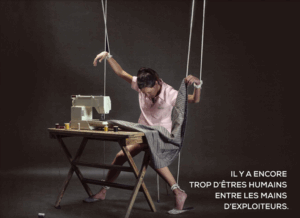
L’équipe de Samilia et ses précieux bénévoles ont distribué 10.000 sacs dans 10 magasins du groupe Delhaize à Bruxelles et dans le Brabant wallon. Cette action du 19 octobre 2015 s’inscrit dans le programme de sensibilisation des consommateurs à la traite des êtres humains dans le cadre du projet européen. Des posters de sensibilisation ont également été mis dans toute les chambres de repos des employés des 146 magasins de la Chaine sur le territoire belge et luxembourgeois. L’affiche a été conçue par l’agence J.Walter Thompson de Bruxelles qui a mis gracieusement à disposition de Samilia 4 personnes en interne afin de soumettre dans des délais courts une magnifique image partant de l’idée d’une marionnette dont nous tenons tous, consommateurs, les ficelles…
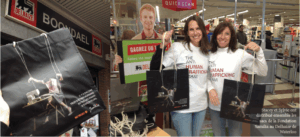
Dans le cadre d’un projet financé par la Commission Européenne, Samilia a développé des outils spécifiques pour les entreprises dont l’objectif est de conscientiser et sensibiliser à tous les niveaux de décision, les dirigeants d’entreprises et les autres employés à la problématique de la traite des êtres humains aux fins d’exploitation économique et du travail forcé.

Comprehensive corporate toolkit for addressing demand for human trafficking


The aim of the European project is to raise awareness, make companies more responsible and encourage them to get involved in the fight against human trafficking, mainly in the value chains of the products they develop or the services they use.

 The Samilia Foundation has been able to realize the desire of companies to follow a more ethical and humanly responsible path, but also the need to have concrete tools to fight against this modern slavery.

 As part of this effort to raise companies’ awareness, the Samilia Foundation has been awarded a European project entitled Comprehensive Corporate Toolkit to Address Demand for Human Trafficking.

 The objectives of this project are threefold:

  1. to make companies aware of the risk of slavery in their value chain
  2. to encourage companies to develop responsible practices, from the basic product to the finished product
  3. to encourage social inclusion programs for former victims of trafficking by offering them training and stable employment, and to support businesses in these initiatives.

To this end, the Foundation, in collaboration with Not For Sale, an Amsterdam-based NGO, has created the following tools:

  • An online tool to raise employee awareness within companies
  • A cross-analysis of companies’ social inclusion needs
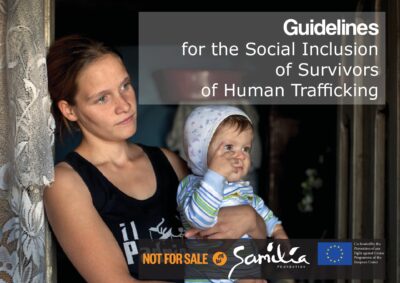
  • Guidelines for the positive and successful social inclusion of victims within the company
  • Ethical guidelines for production lines
  • A video to raise awareness of trafficking
  • A website containing all the tools

The social inclusion project was initiated with Delhaize Group in Romania, Bulgaria and Greece. This project proposes to develop professional integration programmes for victims of human trafficking or potential victims (vulnerable women at high risk) within the shops with the support and collaboration of local NGOs in charge of monitoring the candidates: Mega Image (Bucharest) and Picadilly (Sofia), Alpha Beta (Thessalonica), all three belonging to Delhaize Group. Delhaize Serbia is also interested in developing such programs within their shops.

Delhaize Europe has been challenged by the issue of human trafficking and is working with the Samilia Foundation to develop awareness and information workshops for the staff of their shops in the Balkans. The workshops take place in Belgium, Romania and Greece and bring together several dozen nationalities.

 In 2016, the Samilia Foundation and Not For Sale launched the online awareness tool aimed at raising employees’ awareness of the issue of human trafficking. Initially this online training was taken by one thousand Delhaize employees. The training is now available to other companies and individuals. Employees from Interparking’s Brussels head office also took part.

Comprehensive Corporate Toolkit for Addressing demand of human trafficking

Tools to educate

Human Trafficking Awareness Guidelines



Training Guidelines

Employee Training to Help Identify Human Trafficking : 

A 23 pages training guide to raise awareness about human trafficking among corporate employees. The training is based off the online behind course, and is intended as a complementary tool allowing interested parties to developp customized and interactive workshops based on the guide.

HERE

Code of Conduct

Code of Conduct on Human Trafficking :
Supplier Code of Conduct on Human Trafficking outlining minimum requierments to protect workers in global supply chains. The code serves as a complement to strenghten existing supplier codes covering other responsability aspects, such as health and safety. The code provides standards on forced or compulsory labor, child labor, harassment and abuse, discrimination, wages and benefits, working hours, freedom of association and the right to collective bargaining and management system.

Ethical Sourcing and Production Guidelines

Ethical Sourcing and Production Guidelineson how to establish a management system to mitigate risks for labor exploitation in supply chains. The guide walks compagnies through the process of developing and adopting a code of conduct, tracing suppliers and being transparent, conducting a risk analysis, and monitoring suppliers’ code compliance. It also highlights tools for worker empowerment as well as multi-shakeholder collaborations.

HERE

The Road to REBBL

Through the below video series you can learn how the anti-human trafficking organisation Not For Sale used the entrepreuneurship to incubate a social entreprise, REBBL, to fight medern slavery. The three episodes illustrate the journey from identifying the issue, to generating ideas for it’s solution, and lauching a company to drive social change. To learn more about REBBEL’s story, visit rebbl.co For more information on how businesscan be used as a tool in the fight against human trafficking, read the Huffington Post article : A New Way to Fight Modern-day Slavery : Just Businesses.

OUR PROJECT

The Business Against Slavery project is a collaborative effort between the Samilia Foundation and Not For Sale, two global anti-human trafficking organizations, realized with the finacial support of the Européan Comission.

In 2014, the Samilia Foundation and Not For Sale joined forces and skills to bring together an innovative project targeting the corporate world. Alongside the Samilia Foundation and the Not For Sale, 2 Romanian organizations : GTR and Reaching Out an Italian NGO Idee Migranti joinde as partners in the preject co-funded by the European commission entitled « Comprehensive Corporate Toolkit to address demand for human trafficking ».

The main main objective of the Business Against Slavery project is to provide an approach for private sector companies to address the demand for Trafficking in Human Beings (THB). This objective has been reached by developing and piloting a toolkit for companies that targets both the demand for and supply of THB, as an effectivedemand reduction strategy requires addressing both aspects of the issues.To address the demand of human trafficking, the toolkit provides resources and guidelines to help companies educate employees and customers about the issue. The Toolkit offers a variety of ressources that provides private sector companies with a clear approach the demand and supply aspects of THB. A number of the tools has been developed in consultation with Delhaize Group.


To ensure the effectiveness of the toolkit, a pilote was conducted with Delhaize Group, a major retailer based in Brussels with operations in Romania, Greece and Serbia.

Project Results :

1) A Comprehensive corporate toolkit to guide private sector compagnies on how to effectively address demand for THB accessible at businessagainstslavery.org

2) An effective piloted implementation of the Corporate Toolkit to address the demand for THB

3) A docomented increase in the awareness and knowledge of THB among Delhaize employees in Romania and Greece;

4) Enhanced corporate social responsability programming and consideration of human rights within Delhaize’s operations;

5) Increased level of education among beneficiaries at GTR and Reaching Out in Romania and improvement of social inclusion programmes

6) The development of a line of textile products by Reaching Out beneficiairesunder the guidance of Idee Migranti’s stylists and textile experts and the resulting need to support a social company to provide job opportunities to victims and the further develop talents that emerged througout the collaboration between Idee Migranti and Reaching Out.